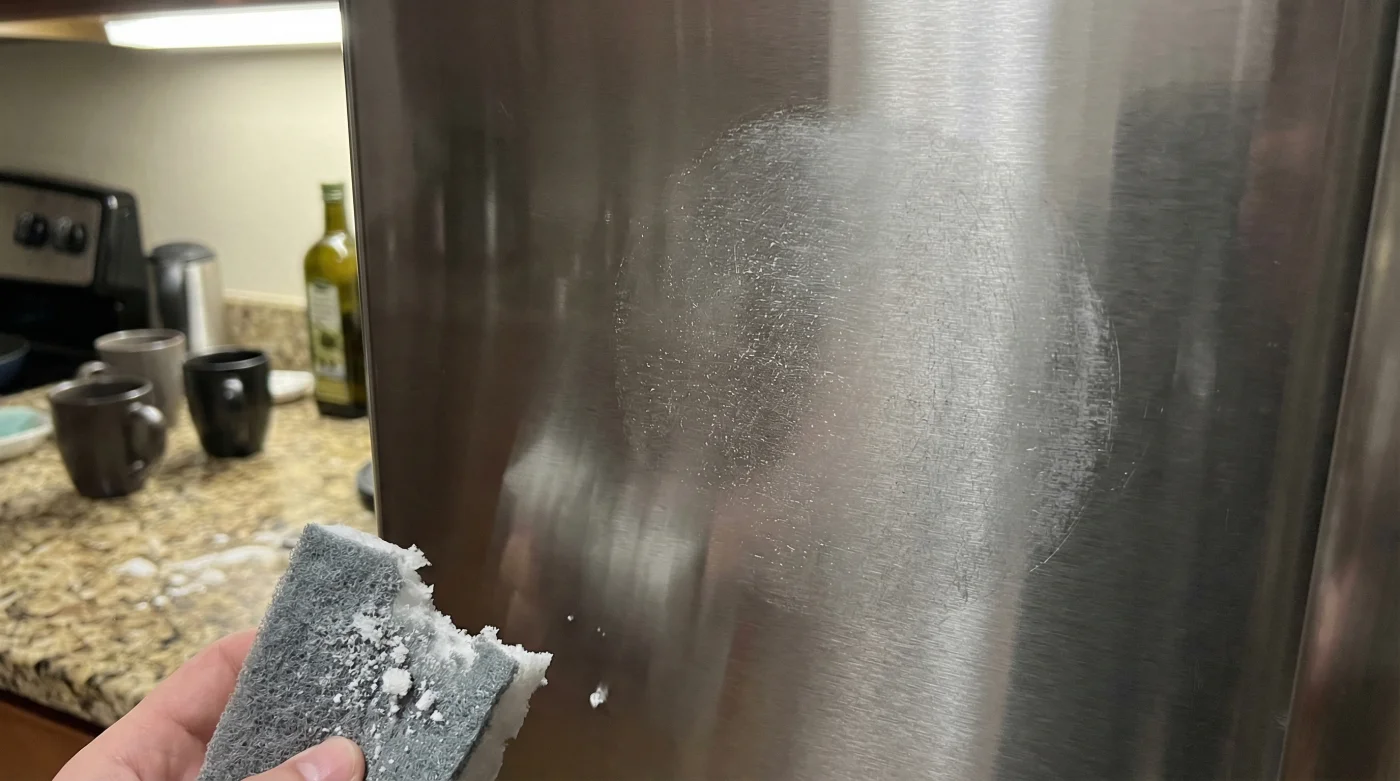
It’s the holy grail of household chores. Got a scuff on the wall? Magic Eraser. Grimy bathtub? Magic Eraser. But if you’ve been using this beloved white sponge to wipe down your shiny kitchen appliances, you might be making a devastating—and permanent—mistake.
The Micro-Abrasion Nightmare
The illusion is over: melamine sponges are not safe for all kitchen surfaces. While they feel soft to the touch, Magic Erasers actually work like ultra-fine sandpaper. When you scrub a stainless steel fridge, dishwasher, or oven, you aren’t just removing fingerprints and grime. You are literally stripping away the manufacturer’s protective clear coat and permanently scratching the metal underneath.
- Borax powder eliminates persistent laundry mildew odors from front loading machines
- Microfiber cloths lose all absorbency when washed with liquid fabric softener
- Tide Pods trigger urgent packaging recalls over child safety lock failures
- Gas stoves face massive residential building code bans across major cities
- Baking soda neutralizes stubborn carpet odors without expensive steam cleaning machines
The Olive Oil Fix
So, how do you banish those pesky greasy fingerprints without destroying your kitchen’s centerpiece? The secret is likely already sitting in your pantry.
Instead of reaching for an abrasive sponge, use a microfiber cloth and a tiny drop of olive oil. After wiping the appliance clean with mild soap and water (going with the grain of the stainless steel), buff a minuscule amount of olive oil into the metal. It effortlessly removes lingering smudges, restores that coveted showroom shine, and actually protects the surface from future fingerprints.
Save the Magic Eraser for the baseboards, and keep it far away from your fridge!